Source Water Soluble Lace for Garments, Home Textile, and Bag
Compare 30 listings of water soluble lace from verified Chinese suppliers. Buyers can evaluate knitted and embroidered options in cotton or polyester blends with customizable sizes and packing for garment, home textile, and industrial applications; compare the available evidence and request quotations based on your requirements.
Key considerations
Products List




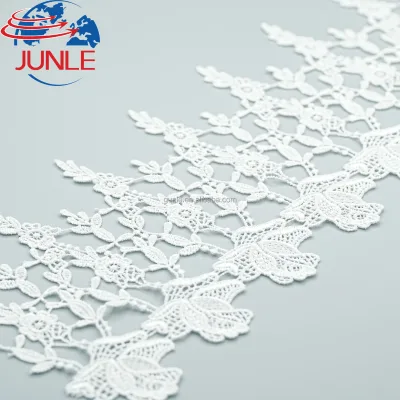


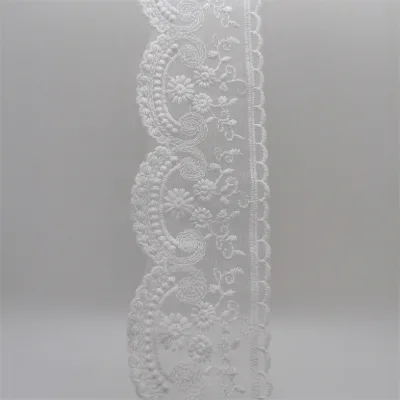
Comprehensive Sourcing Guide
Water Soluble Lace Sourcing Guide
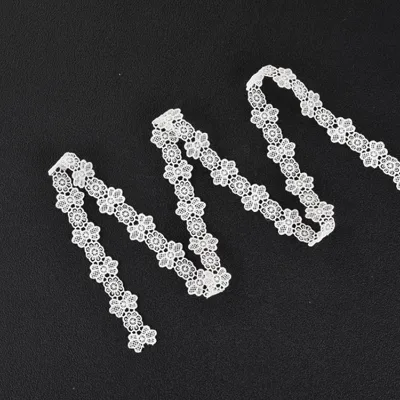
Water soluble lace serves as a critical temporary support structure in high-end garment construction, allowing for intricate embroidery and appliqué work that would otherwise be impossible to achieve on stable fabrics. Buyers must distinguish between chemical lace variants and traditional water-soluble stabilizers, as the latter dissolves completely while the former may leave specific residue depending on the fiber blend. The observed market data indicates a diverse range of product models, including specific chemical lace identifiers like LEMO CHEMICAL LACE 025 and 107, which suggests a complex supply chain where temporary and permanent lace functions often overlap in supplier catalogs.
Procurement decisions for this category require careful verification of the dissolution rate and the final aesthetic outcome, as the lace must vanish without damaging the underlying textile. The observed product attributes highlight a mix of knitted and embroidered techniques, with materials ranging from cotton to polyester blends, each reacting differently to water and heat. Sourcing teams should prioritize suppliers who explicitly define the "Use" cases, such as garment trimming or home textile applications, to ensure the selected lace aligns with the specific dissolution requirements of the manufacturing process.
Product Scope and Observed Listing Signals
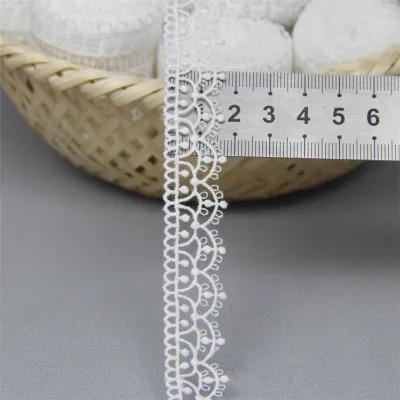
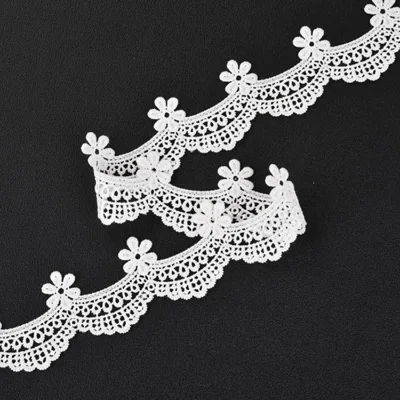
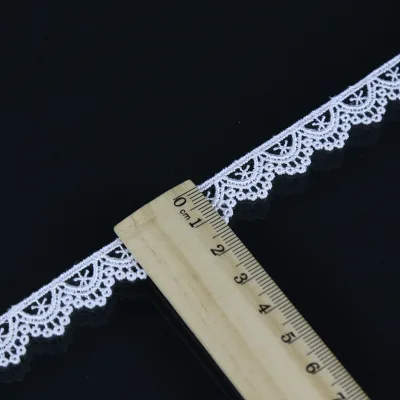
The current market listings reveal a significant variance in product dimensions, with observed sizes ranging from 3.5 to 4.5 cm up to 5-8 cm, indicating that buyers must specify exact width requirements to avoid production delays. While some entries list a standard size of 5-7 cm, others provide custom model numbers like DZC8093, suggesting that off-the-shelf solutions may not fit specialized design needs. The presence of both "Chemical Lace" and "Polyester Lace" categories in the same listings signals that buyers need to clarify whether they require a fully dissolvable material or a permanent decorative element that mimics the appearance of soluble lace.
Minimum Order Quantities (MOQ) in the observed data fluctuate widely, from a low of 1 unit to as high as 50,000 units, with a specific listing noting an MOQ of 1000 yards for certain polyester lace items. This disparity implies that small-batch prototyping is feasible but may require navigating different supplier tiers than mass production runs. Buyers should also note the packing variations, such as 15 yards per plastic bag or customer-specific requirements, as these logistical details directly impact storage costs and handling efficiency in the warehouse.
Technical Specifications to Verify
Technical due diligence must focus on the fiber composition and the specific lace craft, as the observed data lists both knitted and embroidered techniques alongside chemical fiber classifications. The material composition is critical, with listings citing cotton, polyester, and recycled grades, which dictates the thermal stability and dissolution behavior during the washing process. Buyers should verify the "Fiber Type" and "Grade" specifications to ensure the lace will not shrink or distort when subjected to the high temperatures often used in industrial embroidery machines.
Dimensional consistency is another vital parameter, as the observed product standards range from 1 inch to 4 inches, yet specific models claim sizes of 5-7 cm or 5-8 cm. This inconsistency suggests that buyers must request physical samples to confirm the actual width and pattern density before committing to a large order. Additionally, the "Shape" attribute, listed as polyester in some contexts, requires clarification to ensure the lace maintains its structural integrity until the intended dissolution point is reached.
Compliance and Safety Documentation
Safety compliance is paramount when sourcing materials intended for direct contact with skin or food-related textiles, as the observed listings mention standards such as CE, ROHS, and SGS. While these certifications are noted for specific chemical lace models, buyers must verify that the specific batch of water-soluble lace carries the same valid documentation, as standards can vary by production run and origin. The presence of "Recycled" grade materials in the supply chain further necessitates a review of environmental compliance to ensure the recycled content meets the specific regulatory thresholds of the target market.
Chemical safety is equally important, particularly regarding the residues left after the lace dissolves, which can affect the hand feel and safety of the final garment. Buyers should request test reports confirming that the dyeing and bleaching processes used on the lace do not introduce harmful substances, especially since the "Color Production" methods vary between dyed and bleached options. Ensuring that the supplier adheres to strict chemical safety protocols is essential for maintaining brand reputation and meeting international textile safety regulations.
Cost Drivers and Commercial Terms
Pricing in this sector is influenced heavily by the complexity of the lace craft, with knitted and embroidered options commanding different price points based on the labor intensity involved. The observed price range of 0.01 to 12 USD per unit suggests a wide spectrum of quality and volume, where lower prices may correlate with simpler designs or lower-grade materials. Buyers should be cautious of extremely low-cost options that may compromise on the dissolution quality or the consistency of the fiber blend, as these factors can lead to significant production losses downstream.
Commercial terms such as payment methods (T/T, L/C) and shipment options (Air, Ship, Train) play a crucial role in the total landed cost and timeline. The observed sample time of 3-7 days allows for rapid prototyping, but the lead time for bulk production can vary significantly depending on the supplier's location, with origins noted in Zhejiang, Ningbo, and Guangdong. Buyers must factor in these logistical variables when calculating the total cost of ownership, as expedited shipping or complex payment structures can add substantial overhead to the procurement budget.
Supplier Qualification and Quality Control
Supplier qualification should begin with a rigorous assessment of their production capabilities, specifically their ability to handle the "Manual Process" and "Customization" requirements observed in the listings. The ability to produce according to customer requests for packing and dimensions is a key indicator of a supplier's flexibility and quality control maturity. Buyers should verify that the supplier has a dedicated quality assurance team capable of testing the dissolution rate and dimensional stability of the lace before it leaves the factory.
Quality control protocols must include a verification of the "Sample" process, as the observed data indicates that free samples are available with a 3-7 day turnaround. This allows buyers to physically test the lace in their own embroidery machines to ensure it does not jam or dissolve prematurely. Establishing a clear communication channel for feedback on sample quality is essential, as the difference between a successful production run and a failed batch often lies in the subtle nuances of the lace's texture and strength.
Long-Term Procurement Checks
Long-term procurement success relies on establishing a consistent supply chain that can adapt to changing design requirements and volume fluctuations. Buyers should monitor the supplier's ability to maintain the "Standard" specifications over time, as variations in the 1"-4" or 5-7cm ranges can disrupt production schedules. Regular audits of the supplier's inventory and production capacity are necessary to ensure they can meet the high MOQs observed in the market, which can reach up to 50,000 units for certain items.
Continuous improvement in the supply chain involves tracking the performance of the lace in real-world applications, such as garment trimming or industrial uses. Buyers should maintain a database of test results and supplier feedback to identify trends in quality or delivery issues. By fostering a collaborative relationship with suppliers who offer customization and adhere to strict standards, buyers can ensure a steady supply of high-quality water soluble lace that meets the evolving demands of the fashion and textile industries.
FAQs
What is water soluble lace and how is it made?
Water soluble lace is a lace produced on a base fabric that dissolves in water during finishing, leaving only the embroidered or knitted thread structure. The process allows intricate openwork patterns. It is commonly made with polyester or cotton threads using chemical lace or embroidery lace techniques for garments and trims.
What sizes are available for water soluble lace trims?
Listed water soluble lace trims range from 3.5 to 4.5 cm and 5 to 8 cm widths, with some patterns at 5 to 7 cm, following a 1 to 4 inch standard. Width depends on the specific pattern, so confirm the exact model such as LEMO CHEMICAL LACE designs before ordering production quantities.
Can water soluble lace be customized in color and packaging?
Yes, customization is available. Colors are produced through dyeing or bleaching to match your garment requirements, and packing is arranged according to customer request, commonly 15 yards per bag or spool. Provide a color reference and packing specification with your inquiry so the factory can quote accurately and prepare samples.
How do I get a sample of water soluble lace before ordering?
Free samples are offered, with sample time typically 3 to 7 days. Request the specific model number and width you need so the sample matches production goods. Because sample production is quick, you can test dyeing, hand feel, and pattern detail before committing to a bulk order or confirming lead times.
What is the minimum order quantity for water soluble lace?
The listed MOQ is 1000 yards, though some listings show lower minimums for stock patterns. MOQ can vary by pattern complexity, width, and whether custom dyeing is required. If your project needs less than 1000 yards, ask about available stock designs, as standard patterns are often easier to supply in small runs.
Which materials are used in water soluble lace production?
Water soluble lace is commonly made from cotton, polyester, or cotton polyester blends, with some recycled-grade fibers available. Polyester offers durability and shape retention, while cotton provides a natural hand feel. Fiber choice affects dyeing results, softness, and suitability for garments, home textiles, and other applications, so specify your preference early.
What payment and shipping options apply to water soluble lace orders?
Payment terms include T/T and L/C, and shipment can be arranged by air, by ship, or by train depending on urgency and volume. Air freight suits urgent small orders, while sea and rail are more economical for large quantities. Confirm terms, destination port, and packing details when negotiating your order.
Which applications suit water soluble lace trims?
Water soluble lace is used mainly as garment trimming, including dresses, lingerie, and children's clothing, and also in home textiles and cloth decoration. Its openwork structure works well on edges, necklines, and panels. Width, fiber content, and dye color should be chosen to match the fabric and care requirements of the end product.